
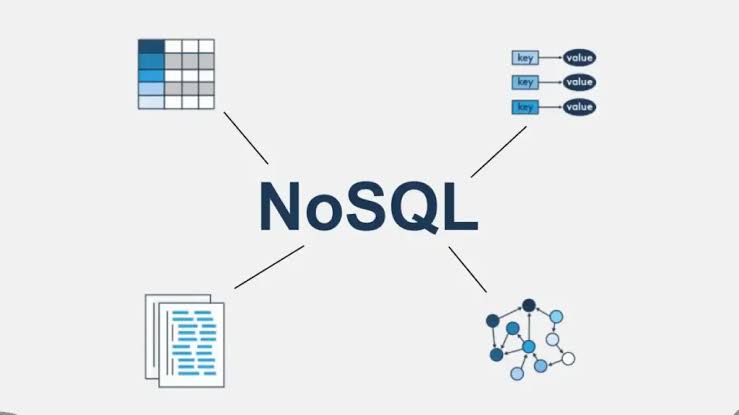
The 4 Core Types of NoSQL Databases
| Type | How It Works | Best For | Popular Examples |
|---|---|---|---|
| Document Stores | Stores data as schema-flexible JSON, BSON, or XML documents. Nested structures allow complete profiles to be saved as single objects. | E-commerce catalogs, Content Management Systems (CMS), user profiles. | MongoDB, CouchDB, Firebase Firestore. |
| Key-Value Stores | Acts like a giant hash map where a unique key pairs with an opaque data value. Offers the fastest read/write times. | Caching, user session tracking, shopping carts, real-time leaderboards. | Redis, Amazon DynamoDB, Memcached. |
| Wide-Column / Column-Family | Stores data in rows, but individual rows can have entirely different columns. Great for querying massive, sparse datasets. | IoT sensor data, time-series logging, massive big data analytics. | Apache Cassandra, Apache HBase, Google Cloud Bigtable. |
| Graph Databases | Uses nodes (entities) and edges (relationships) to map data connections. Traverses relationships without costly SQL JOIN operations. | Social networks, fraud detection networks, recommendation engines. | Neo4j, Amazon Neptune, Janus |
Key Characteristics & Advantages
• Horizontal Scalability (Scaling Out): Instead of upgrading to larger, expensive servers (vertical scaling), NoSQL scales out by distributing data across clusters of commodity hardware to support billions of queries.
• Schema Flexibility: Developers can insert records without defining a structure beforehand. You can modify fields on the fly without running complex database migrations.
• High Availability & Partition Tolerance: Most NoSQL tools copy data across multiple geographical servers automatically, ensuring zero downtime even if a server node crashes.
• BASE over ACID: Rather than locking down the database for strict consistency (ACID), NoSQL often prioritizes availability and performance, favoring Eventual Consistency (BASE)—where data updates propagate across the network within moments.
Key Trade-Offs
• Lack of Joins: They are optimized for self-contained queries; linking distinct data types requires manual coordination inside your code.
• Standardization: There is no universal querying standard like SQL; moving apps from Cassandra to MongoDB requires rewriting database logic.
• Data Duplication: To guarantee fast reads, data is often intentionally duplicated across documents, increasing the risk of data inconsistency if not handled carefully.