
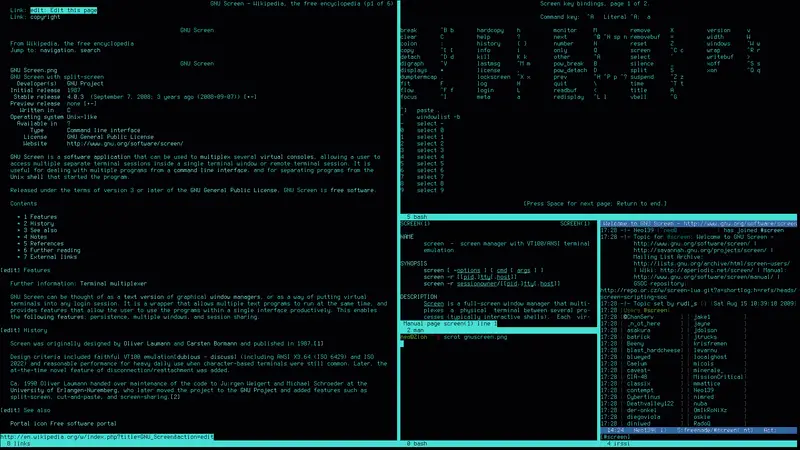
Linux is a free, open-source, Unix-like operating system family built around the Linux kernel, originally created by Linus Torvalds and released on September 17, 1991.
Key Concepts & Components
- The Kernel: The core brain of the OS that manages hardware resources like the CPU, memory, storage, and device drivers.
- Distributions ("Distros"): Because Linux is open-source, it is bundled with software, package managers, and desktop environments into distinct operating systems like Ubuntu, Fedora and Debian
- User Interfaces: Can be operated through a graphical user interface (GUI) or a command-line interface (CLI / terminal) for deep system control.
Where Linux is Used
- Servers & Cloud: Powers the vast majority of global web servers, enterprise cloud workloads, and mainframes.
- Supercomputers: Runs over 90% of the world's most powerful supercomputers.
- Mobile & Embedded: Android is built on a Linux-based kernel, and Linux powers smart devices, automobiles, and aerospace/spacecraft systems.
- Desktop & Development: Used by programmers, cybersecurity analysts (e.g., via Kali Linux), and everyday users looking for a customizable alternative to Windows or macOS.
- Real-Time Performance: SpaceX patches its Linux kernel with PREEMPT_RT to ensure deterministic, low-latency, real-time control over critical flight systems like rocket engines and fin actuators.
- Commercial Hardware over Radiation Hardening: Instead of slow, expensive, radiation-hardened space processors, SpaceX uses standard dual-core x86 processors.
- Triple-Modular Redundancy (TMR): To counter radiation-induced bit flips in space, Falcon 9 and Dragon use three redundant computers running identical code in parallel. An "actor-judge" voting model compares the outputs, allowing the majority to override any faulty board.
- Custom Distribution: SpaceX does not use an off-the-shelf Linux distribution like Ubuntu or Fedora; instead, it maintains its own internal kernel build, custom toolchains, and specialized drivers.
CASE STUDY
Elon Musk's SpaceX uses a heavily customized, real-time Linux operating system running on commodity x86 hardware for its primary flight computers across the Falcon 9, Dragon, and Starship programs.
Key Details of SpaceX's Linux Implementation